Fast stabilization
The goal on day one is to stop further loss: extract water if present, set drying equipment, and prevent moisture from migrating into adjacent rooms and materials.
Serving New Orleans, Louisiana & surrounding areas
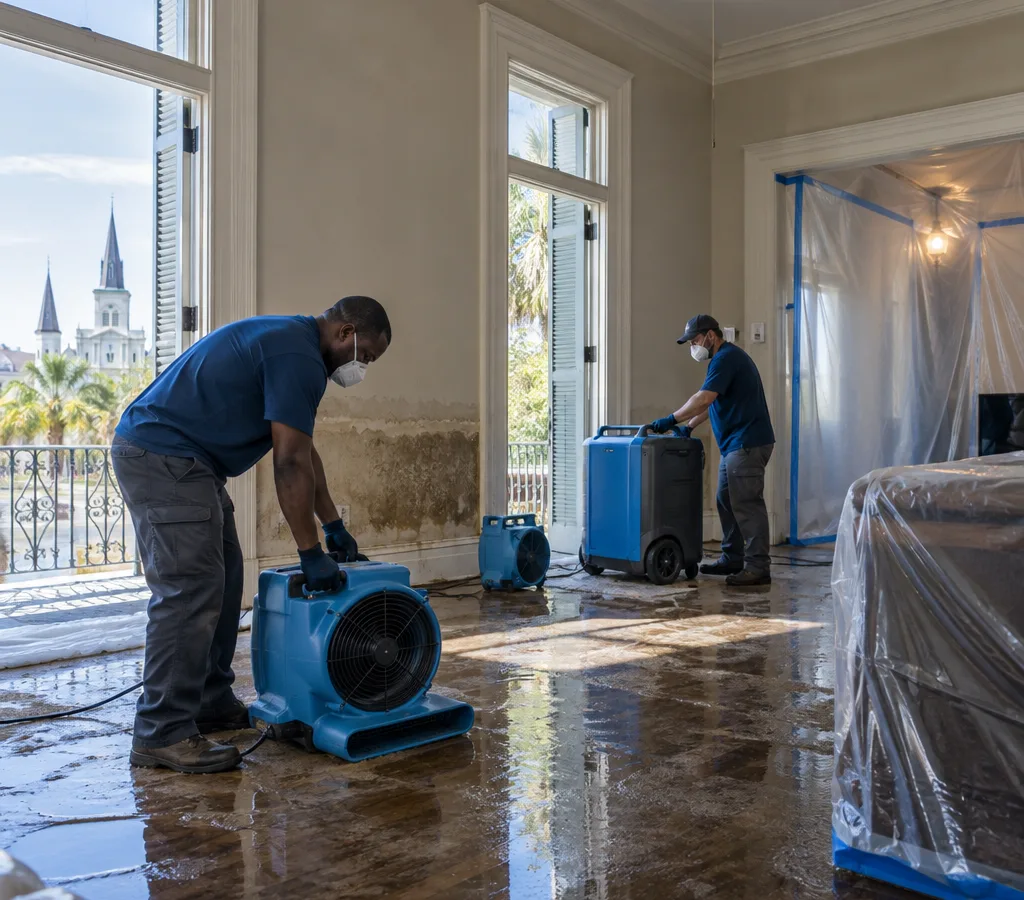
Water damage remediation · New Orleans
When water gets into walls, floors, or HVAC systems, damage spreads fast. We respond quickly, document what happened, dry the structure, and manage safe mold remediation so you can make clear repair decisions.
Protect the property first
Water damage New Orleans property owners deal with is rarely just a wet spot. In our climate, moisture trapped behind drywall, under flooring, or inside cabinets can turn into odor, swelling, corrosion, and mold growth.
Start with safety and stopping the source. If water is actively leaking, shut off the nearest valve or the main supply. If there is standing water near outlets, panels, or appliances, keep people out of the area until power is confirmed safe. After that, time matters: the sooner you get professional drying and moisture mapping, the less hidden damage you carry forward into repairs.
We handle residential and commercial water damage in New Orleans with a practical approach: inspect, document, dry, remove unsalvageable materials when needed, and build a written plan for next steps. If mold is present or likely, we add containment and controlled removal to keep spores from spreading to clean areas.
As part of mold remediation New Orleans, our team focuses on moisture control first, because mold problems keep returning if the building materials never fully dry.
Find and control hidden moisture
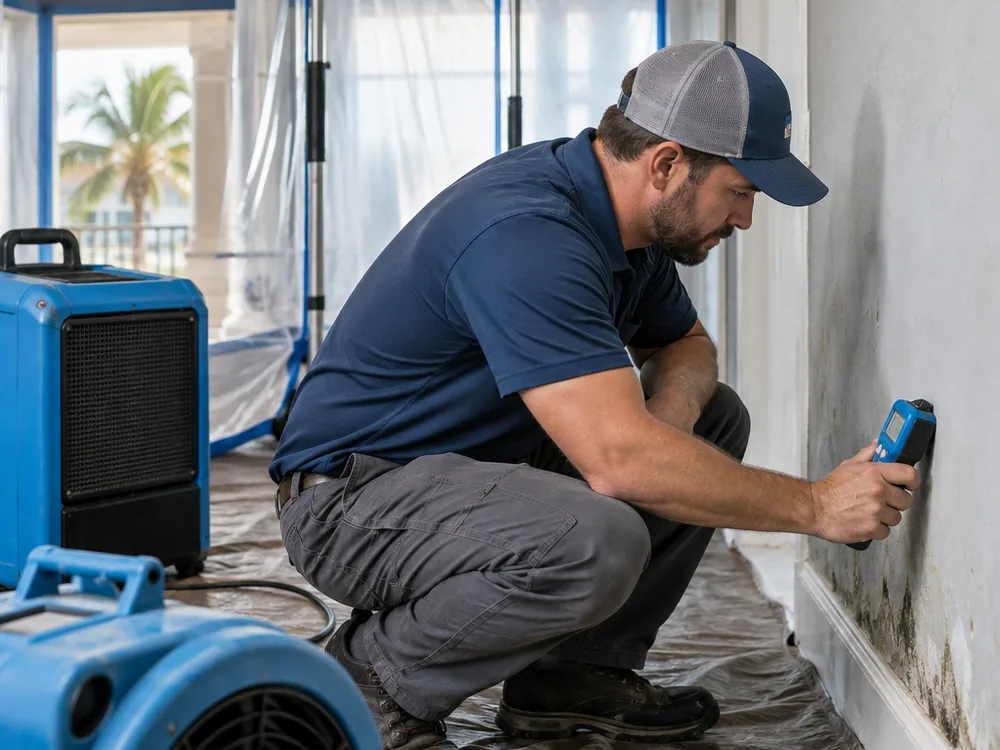
A reliable water-damage job starts with finding where the moisture actually is, not just what you can see. We use non-invasive moisture meters for drywall and wood, and we confirm wet pockets behind finishes so drying equipment is placed where it does real work.
Typical drying and cleanup work may include:
In New Orleans, older homes with plaster, layered flooring, or tight crawlspaces can hide moisture longer than expected. Homes around Uptown and the Garden District often have details worth protecting, so the plan should be careful about what gets removed and what can be dried in place. In Mid-City and Gentilly, slab-on-grade areas can still trap moisture under certain flooring systems, so we check edges, transitions, and underlayment.
You will get clear notes on what is wet, what is being dried, and what materials are unlikely to recover. That makes it easier to coordinate repairs without guessing.
Clear response standards
The goal on day one is to stop further loss: extract water if present, set drying equipment, and prevent moisture from migrating into adjacent rooms and materials.
If there is visible growth, a musty odor, or a long-standing leak, we isolate the work area and run HEPA filtration so spores and dust stay controlled.
You should receive a straightforward plan: what is wet, what can be dried, what must be removed, and what the repair phase will likely involve.
Drywall, insulation, hardwood, engineered flooring, and cabinets respond differently to water. We explain salvageability based on condition, not hope.
Photos, moisture readings, and notes help when you are coordinating with a landlord, property manager, insurance adjuster, or a repair contractor.
Look beyond the wet surface
After a leak or flood, the visible mess is only part of the problem. Mold and odor issues usually come from places that stayed damp after the surface looked dry.
Common hidden zones we check during water damage cleanup in New Orleans include:
Moisture can remain inside wall cavities and behind trim near the visible water line.
Tile, vinyl, and floating floors can conceal wet underlayment or subflooring after the surface appears dry.
Toe-kicks, sink bases, and cabinet backs can swell or retain moisture where airflow cannot reach.
Returns, condensate lines, supply boots, and wet insulation can hold moisture and move humid air through the building.
When we see conditions that support growth, we treat it like a controlled remediation project, not a quick spray-and-go. That means containment, HEPA filtration, careful removal of impacted porous materials, and cleaning of remaining surfaces. If contents are affected, we can also outline what should be isolated, cleaned, or discarded so you do not bring contamination back into a clean room.
If you are in the French Quarter or Bywater with older assemblies and tight shared walls, containment matters even more. A poorly controlled demo can spread dust and spores through adjoining spaces.
Request Emergency ServiceAssessment through repair handoff
We identify the water source, look for electrical and slip hazards, and note any obvious structural or material failures that affect the plan.
We measure and mark wet areas, including likely hidden pockets, and explain drying in place versus selective removal.
Standing water is extracted first. If materials are unsalvageable or trapping moisture, we remove them carefully to open cavities for drying.
We set dehumidifiers and air movers based on the affected materials and layout, then re-check moisture levels to confirm the structure is trending dry.
When mold is present or likely, we add containment, HEPA air filtration, and cleaning or removal steps appropriate to the material and extent.
Once the structure is dry and affected areas are cleaned, you get a summary of the work and the next repairs for drywall, paint, flooring, or cabinets.
Planning the cleanup scope
Water damage cleanup in New Orleans typically ranges from about $900 to $6,000+, with small contained leaks often landing at the low end and multi-room drying, demolition, and mold-related containment pushing higher. A simple extraction and drying setup may be $900 to $2,500, while projects that require removing wet drywall, insulation, flooring, or cabinets often run $2,500 to $6,000+.
Final cost depends on how long materials stayed wet, how far water traveled, how much demolition is required to access cavities, equipment time on site, and whether mold remediation and containment are needed. Exact pricing is confirmed after an on-site inspection and moisture mapping.
Customer experience
“We had water under the floor after a supply line leak. They showed us exactly where the moisture was with readings, set up drying equipment the same day, and kept the work area clean while they removed the damaged baseboards.”
“After a long slow leak behind the kitchen cabinets, the musty smell got worse. The containment setup made a big difference, and the drying plan was clear enough that our repair contractor could step in without delays.”
Answers before cleanup begins
You should start professional drying as soon as you can, because moisture trapped in wall cavities and under floors can begin causing secondary damage quickly in New Orleans humidity. Even if the surface feels dry, materials like drywall, insulation, and subflooring can stay wet and feed odor and mold. A moisture-mapping inspection tells you whether you are dealing with a simple dry-out or a larger hidden-loss problem.
Yes. When water damage and mold overlap, the work needs to be planned as one project: stop the source, dry the structure, and use containment and HEPA filtration if mold is present or likely. Treating mold without fixing moisture often leads to recurrence, while drying without controlling contamination can spread spores during demolition.
We work on common causes like supply line leaks, overflowing fixtures, appliance leaks, roof leaks, and storm-related intrusions. The approach changes based on what got wet and how far the water traveled, so the first step is always inspection and moisture mapping.
Sometimes, but it depends on how long the wood stayed wet, whether water got under the boards, and whether the floor is solid hardwood or engineered. Cupping, swelling, and delamination are signs the assembly may not recover. We can dry and monitor moisture levels before refinishing or replacement decisions are made.
We remove materials when they are structurally compromised, contaminated, or trapping moisture so drying cannot be verified. Drying in place can work under the right conditions, but New Orleans buildings often have layered assemblies where water hides, making selective removal the fastest route to a truly dry structure.
We use poly barriers and zipper doors for physical containment and run HEPA air filtration to manage airborne particles during removal and cleaning. We also control how materials are cut out and bagged and keep clean areas separated from the work zone.
If it is safe, stop the source, move valuables and porous items out of the wet area, and take photos of affected rooms and materials. Avoid running your HVAC if you suspect moldy materials are in returns or nearby wall cavities. Do not paint over staining or odor because it can hide moisture that still needs drying and remediation.
Take the next step
Tell us what happened and where the water reached. We will schedule an on-site assessment, map moisture you cannot see, and lay out a clear plan for drying, cleanup, and any mold-related steps before repairs begin.