Licensed, trained technicians
Our crew is licensed and trained in containment, negative air, HEPA filtration, and structural drying. Every technician follows the same written safety and quality standards on every job.
Serving New Orleans, Louisiana & surrounding areas
About us · New Orleans, Louisiana
mold remediation new orleans is a locally based, licensed mold remediation company serving homes and businesses across New Orleans, LA. Our team handles inspection, containment, removal, and drying with clear documentation, so you always know what we found, what we are doing, and why.
Who we are
New Orleans humidity, frequent storms, and older housing stock create some of the most challenging mold conditions in the country. Our company was built here, for here. Every technician on our crew is trained in controlled containment, source removal, and structural drying, and we approach every job the same way: find the moisture, contain the area, remove what cannot be saved, and document everything so you can make informed repair decisions.
As a locally owned mold remediation company, we serve residential and commercial customers across New Orleans, LA (70139) and surrounding neighborhoods. We do not believe in "spray and pray." We explain the scope in plain language: where containment starts and stops, what materials are being removed versus cleaned, what equipment is used—including negative air and HEPA filtration—and what condition the area will be left in.
Our broader mold remediation in New Orleans service includes containment, cleanup, and returning the area to a clean, dry baseline after mold impact.
Our standards
Our standards are the same whether the job is a single closet or an entire floor. Every project follows the same disciplined sequence:
Remediation does not automatically include rebuilding or decorative restoration unless that scope is agreed to. Keeping remediation and repairs clearly separated helps you understand what you are paying for and what comes next.
What sets us apart
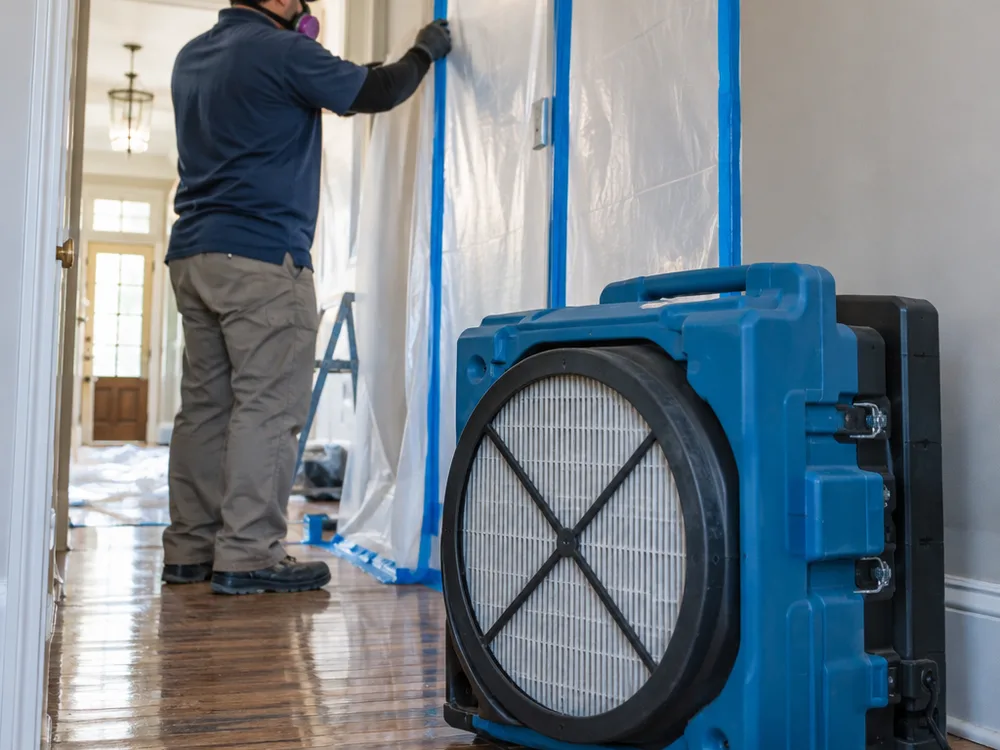
Our crew is licensed and trained in containment, negative air, HEPA filtration, and structural drying. Every technician follows the same written safety and quality standards on every job.
Not every material can be "treated," and we tell you so up front. Our scopes say exactly what is removed, what is cleaned, and why—before any work begins.
We live with Gulf humidity too. Our team ties every remediation plan to the likely moisture source—humidity, leaks, or condensation—so the fix is durable, not temporary.
Older homes, tight crawlspaces, and finished interiors take careful planning. We map access before we start so the work moves without guesswork and your household stays as livable as possible.
You receive notes about affected areas, equipment used, and post-remediation condition—so you can coordinate repairs, satisfy an insurer, or simply keep good records.
How a project runs
We review visible growth, odor complaints, and moisture indicators, then define the work area and containment plan. You get a clear scope before any demolition or removal starts.
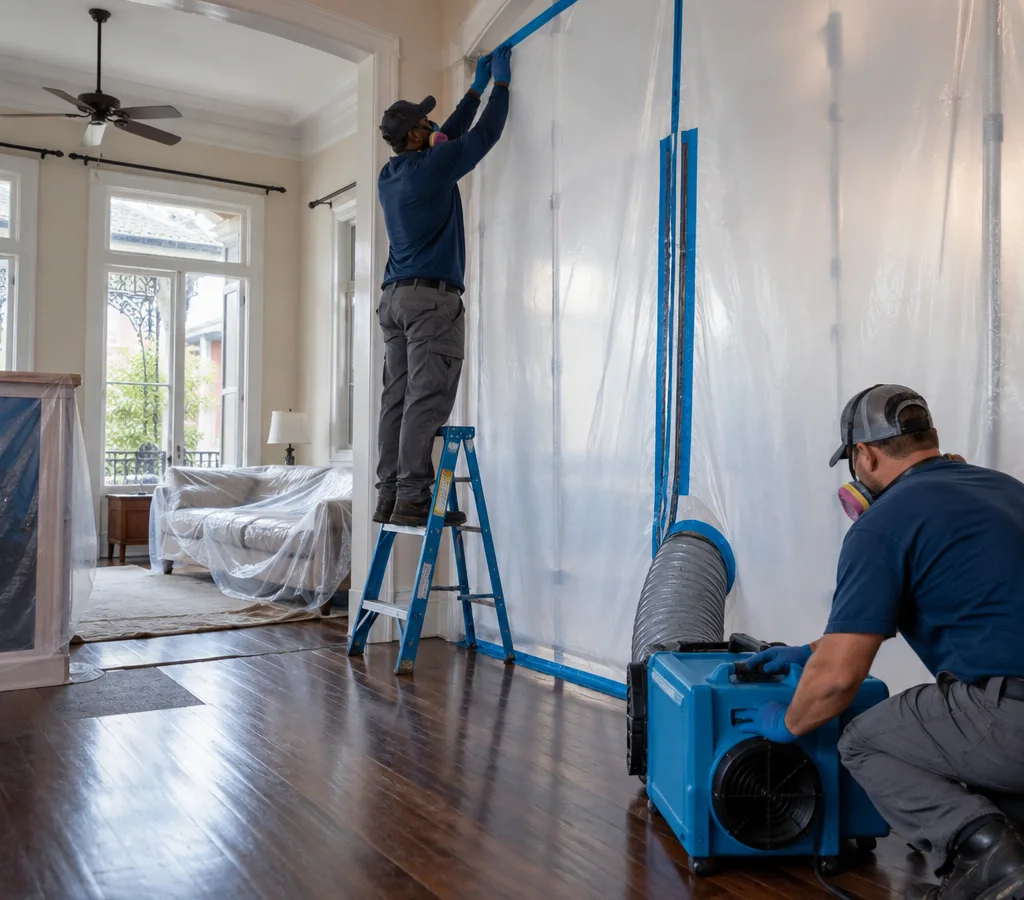
We isolate the impacted zone with poly sheeting and controlled entry. When appropriate, negative air keeps airflow moving into containment rather than out into the rest of the building.
We remove unsalvageable porous materials, HEPA vacuum, and clean remaining surfaces using methods suited to the substrate. Debris is bagged out through the containment path.
If materials are damp, we use dehumidification and airflow as needed and confirm the area is trending dry. Moisture conditions determine when it is ready for repairs.
We detail-clean the containment, remove barriers, and leave the area ready for rebuild work. We also share what we found about likely moisture sources so you can prevent repeat issues.
Built for Gulf humidity
A mold plan that works in a dry climate can fail in New Orleans. Long-term humidity means surfaces can stay damp enough for growth even without a dramatic leak, especially in closets, behind furniture on exterior walls, and around supply and return ducts.
Housing styles also matter. Raised homes can hide moisture issues under the floor system; slab-on-grade homes can show dampness at baseboards after water intrusions; older plaster walls and layered renovations can make it harder to see what is affected until selective removal begins.
Older construction and shaded lots can slow drying.
Heavy rains can expose weak points around windows and roof penetrations.
Storm-related moisture events can leave hidden wall-cavity impact.
Attics and ductwork can create condensation when ventilation and insulation are out of balance.
The right scope accounts for access, drying time, and how to keep the rest of the property livable during the work. If your situation includes ongoing moisture or building-envelope questions, we can explain how remediation and prevention fit together so the cleanup you pay for holds up.
Our promise on pricing
Mold remediation in New Orleans typically ranges from about $1,500 to $6,500 for many residential projects, with small, contained areas sometimes closer to $800 to $1,500 and larger or multi-room jobs reaching $8,000+ when removal and heavy containment are required.
Your final price depends on how far the impact spreads, what materials must be removed, access conditions, the required containment level, and how much drying equipment time is needed. Exact cost is confirmed after an on-site inspection and written scope.
Request Emergency ServiceWhat customers say
“They explained what had to be removed versus what could be cleaned, set up containment so the rest of the house stayed usable, and left the area ready for our contractor to rebuild.”
“The musty odor was coming from a closet wall. The crew found the moisture issue, documented everything, and the cleanup was handled without dragging dust through the house.”
Answers before work begins
Start times depend on crew availability and how urgent the situation is, but many projects can begin quickly once the scope is approved. If there is active water intrusion or the impacted area is growing, the priority is to isolate the area and stop moisture so the problem does not spread while you wait.
Containment is recommended whenever work could disturb mold-impacted material and move spores into clean areas, which is common during removal and aggressive cleaning. Smaller surface-level issues may use limited barriers, but larger areas typically need full poly containment and HEPA-filtered negative air to control airflow in occupied New Orleans homes.
Sometimes, but not always. If mold is on or inside porous drywall or insulation, removal is often the correct approach because those materials are hard to clean to a reliable standard. We determine whether cleaning is appropriate based on the material type, the extent of impact, and whether moisture has been corrected.
In many cases, yes, because the musty odor is usually tied to active growth and damp materials. Odor can persist if moisture remains or impacted materials stay in place, so remediation plans in New Orleans often include drying steps and selective removal to address odor at the source.
It can be, depending on the work area and the level of containment. Many customers stay in the home while a bathroom, closet, or single room is remediated as long as containment keeps dust and airflow controlled; larger projects or work in central living areas may be more disruptive.
Keep people and pets away from the affected area, avoid running fans that blow from the impacted room into the rest of the house, and do not disturb visible growth. If you can safely do so, set the HVAC to avoid pulling air from the affected space, since returns can move contaminants through ductwork.
Take the next step
Tell us what you are seeing and where it is happening. We will inspect the affected area, explain containment and removal options, and provide a written plan you can use to move forward with cleanup and repairs.