Musty odor that keeps coming back
Odor can point to hidden damp materials or microbial growth. Testing helps confirm whether the air is carrying elevated spores and whether the issue is confined to one area.
Serving New Orleans, Louisiana & surrounding areas
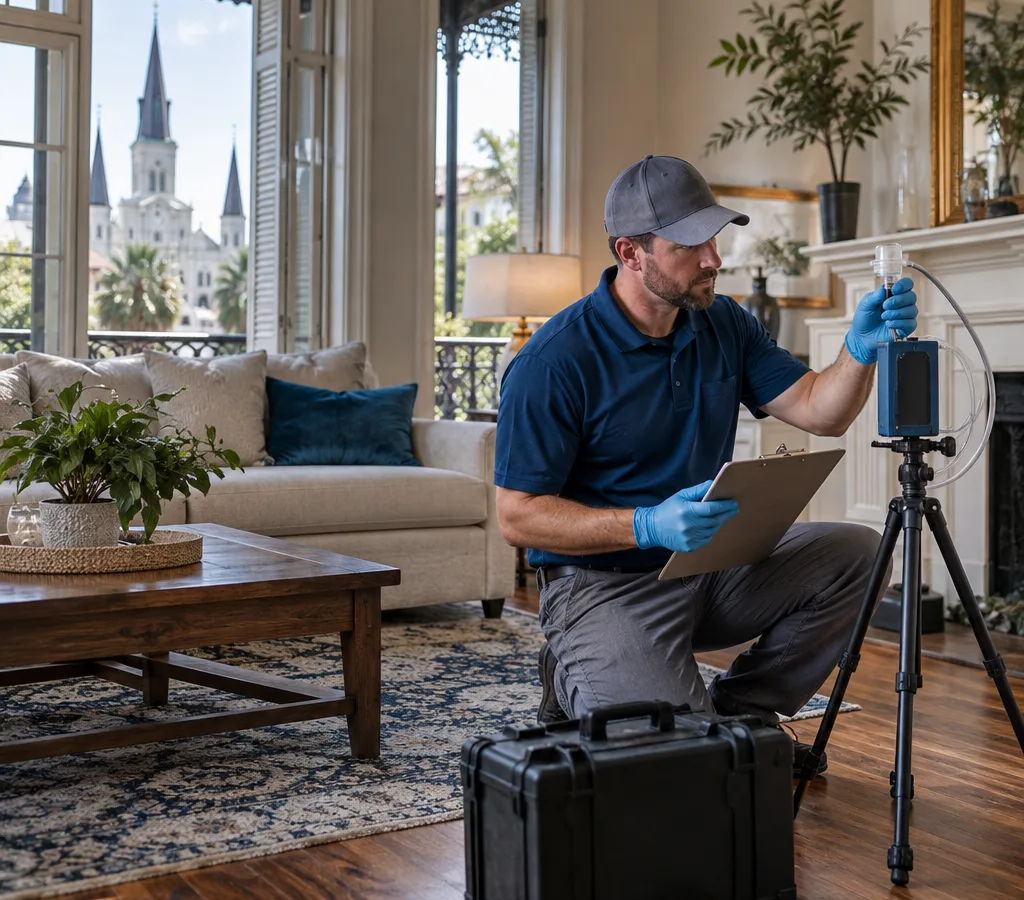
Air quality testing · New Orleans
If you smell mustiness, see recurring spots, or keep getting allergy-like symptoms indoors, testing can tell you what is in the air and where to focus next. We provide clear sampling options, documented results, and practical next steps for homes and small commercial spaces.
Useful answers, clear limits
Air quality testing in New Orleans is most useful when you need answers you can act on: whether airborne mold spores are elevated, whether a specific area is likely contributing to contamination, or whether conditions inside differ from outside.
If your concern is primarily mold-related, start with a short interview about the building history, a moisture check, and a sampling plan matched to musty odor, visible growth, post-leak concerns, or a real estate deadline. Testing works best as part of a broader indoor-contamination plan.
A sampling plan built for the property
New Orleans buildings deal with frequent humidity swings, heavy rain events, and older construction details that can hide moisture. That combination makes a careful sampling plan more important than simply taking one air sample and guessing.
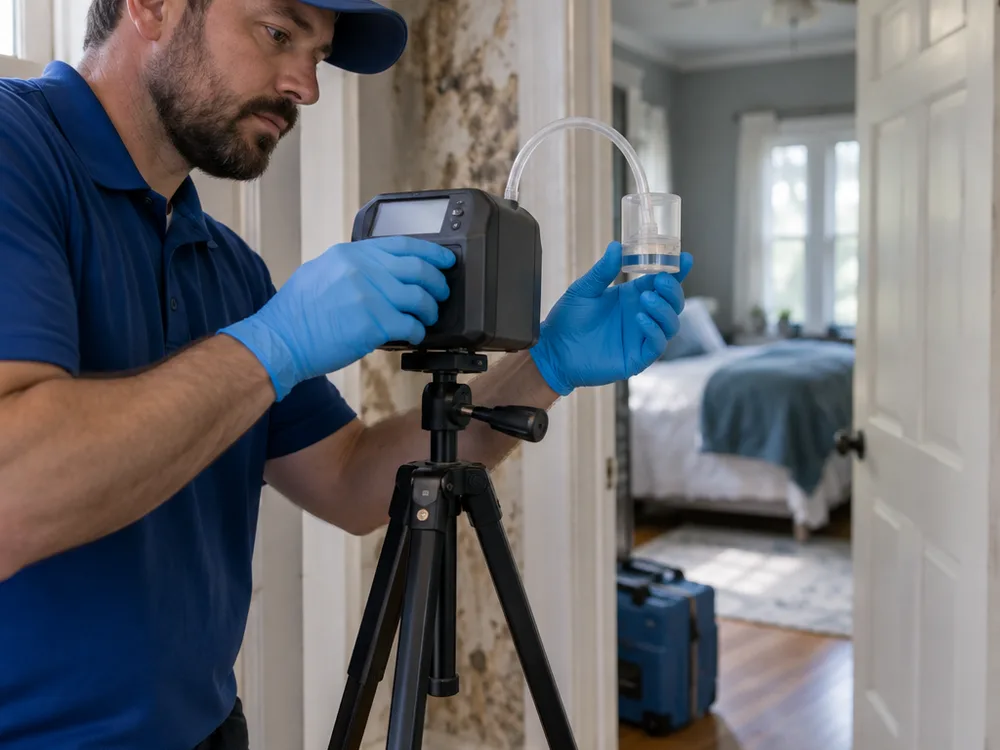
We look for prior water intrusion, staining, odor patterns, HVAC return locations, and areas with limited airflow. Non-invasive and, when appropriate, pin-type moisture readings help determine where sampling will be meaningful.
A same-day outdoor sample provides the reference point. Indoor samples are interpreted in context rather than in isolation.
Each sample is labeled, logged, and handled consistently. Your report ties the findings back to where and how each sample was taken.
Across Uptown, Mid-City, Lakeview, and Gentilly, building layouts and ventilation patterns differ. Sampling locations are selected to match how air moves through your specific home, not a template.
When measurement helps
Odor can point to hidden damp materials or microbial growth. Testing helps confirm whether the air is carrying elevated spores and whether the issue is confined to one area.
When materials got wet, sampling can help determine whether drying was enough or whether additional investigation is needed before you close things back up.
Buyers and sellers often need a documented snapshot of conditions. A clear sampling plan and written results help support decisions without delay.
If symptoms improve when you leave and return when you come back, it is reasonable to measure what is in the indoor air and look for moisture drivers.
After work is completed, follow-up sampling can provide added confidence that airborne levels are consistent with a normal indoor environment for that day and season.
From concern to clear direction
We ask what prompted testing—odor, visible spotting, recent water intrusion, or a real estate request—and identify which rooms and systems to include.
We look for staining, condensation points, HVAC return paths, and other indicators. Moisture measurements guide sample placement so results are interpretable.
Samples are taken with standardized procedures and labeled with time, location, and conditions. An outdoor control sample is included when airborne testing is performed.
Samples are sent to a qualified lab for analysis. You receive documented findings tied to each location sampled.
We explain what the results mean and outline practical options, which may include targeted investigation, cleaning, moisture correction, or follow-up testing.
Planning the sampling scope
Air quality testing in New Orleans typically ranges from about $300 to $900+, depending on how many samples are collected and what type. A basic visit with 2 to 3 air samples is often in the $300 to $600 range, while larger homes, multiple zones, or combined air and surface sampling commonly run $600 to $900+.
Final price changes with the number of rooms, whether an outdoor baseline is included, access to suspect areas such as attics or crawlspaces, and whether moisture mapping is needed to choose sample locations. Exact pricing is confirmed after the on-site evaluation and sampling plan are set.
If you want answers you can trust, start with a sampling plan that matches the problem you are seeing, not a one-size-fits-all bundle.
Call for Emergency HelpAnswers before sampling
Most homes start with 2 to 4 air samples: one outdoor baseline and one or more indoor samples in areas of concern. The right count depends on layout, HVAC zones, and whether symptoms are confined to a room or spread across the home.
For mold-related air sampling, an outdoor control sample taken the same day is the standard reference point for interpreting indoor results. Indoor-only samples can be done, but they are harder to interpret because spore levels naturally vary with weather and season.
Keep conditions normal: run the HVAC as you typically do, avoid heavy cleaning right before sampling, and let us know about recent water events or construction. If a room is normally kept closed, keep it that way so we can sample the environment you actually live in.
Air testing can indicate that spores are present in the breathing zone, but it cannot pinpoint an exact hidden source by itself. If results suggest a problem and moisture readings support it, the next step is targeted investigation to locate the wet or contaminated material.
Turnaround depends on the lab and the analysis requested, but many mold air and surface samples are reported within a few business days. If you have a real estate deadline, tell us up front so we can plan sampling and shipping accordingly.
Yes. You get a clear summary of what was sampled, what the lab found, and what those findings mean for your situation. If follow-up work is warranted, we can outline options and priorities so you can make a decision with a written scope.
Take the next step
Tell us what you are noticing and where. We will recommend a sampling approach that fits your home, your timeline, and the level of certainty you need before taking the next step.