Containment first
We set containment before disturbance. Cutting drywall or pulling flooring can send spores into adjacent rooms if the area is not isolated.
Serving New Orleans, Louisiana & surrounding areas
Mold removal · New Orleans
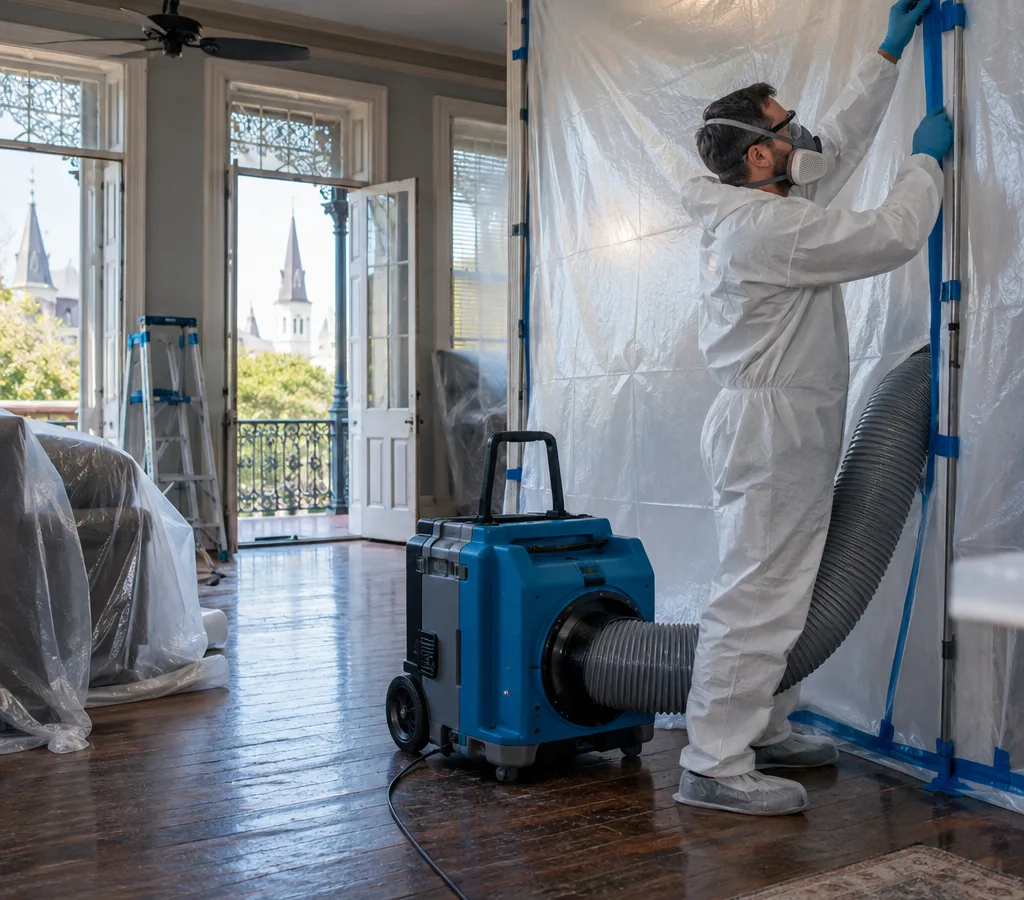
If you have visible growth, a musty odor, or damage after a leak, we provide licensed remediation with proper containment, careful removal, and a clear plan to keep it from coming back.
Know the warning signs
Mold spreads when moisture lingers. In New Orleans, that often means growth after roof leaks, plumbing failures, window leaks, HVAC condensation, or flooding and high indoor humidity.
You should get an on-site evaluation if you notice:
Wiping a surface may remove staining, but it does not address what is inside porous materials or behind walls. Proper mold removal in New Orleans focuses on finding the moisture source, stopping cross-contamination, and removing affected building materials the right way.
If you are comparing providers, start at the company overview for mold remediation in New Orleans and then use this service page to understand what the removal work includes and what to expect on-site.
A controlled removal scope
A professional removal job is built around controlling airborne spores and removing contaminated materials, not spreading them through the house.
A typical scope includes:
In older New Orleans housing stock, repeated small leaks can build up over time, especially around bathrooms, kitchens, and additions where materials meet. That is why we focus on the boundary of hidden moisture, not just the spots you can see.
Controlled from start to finish
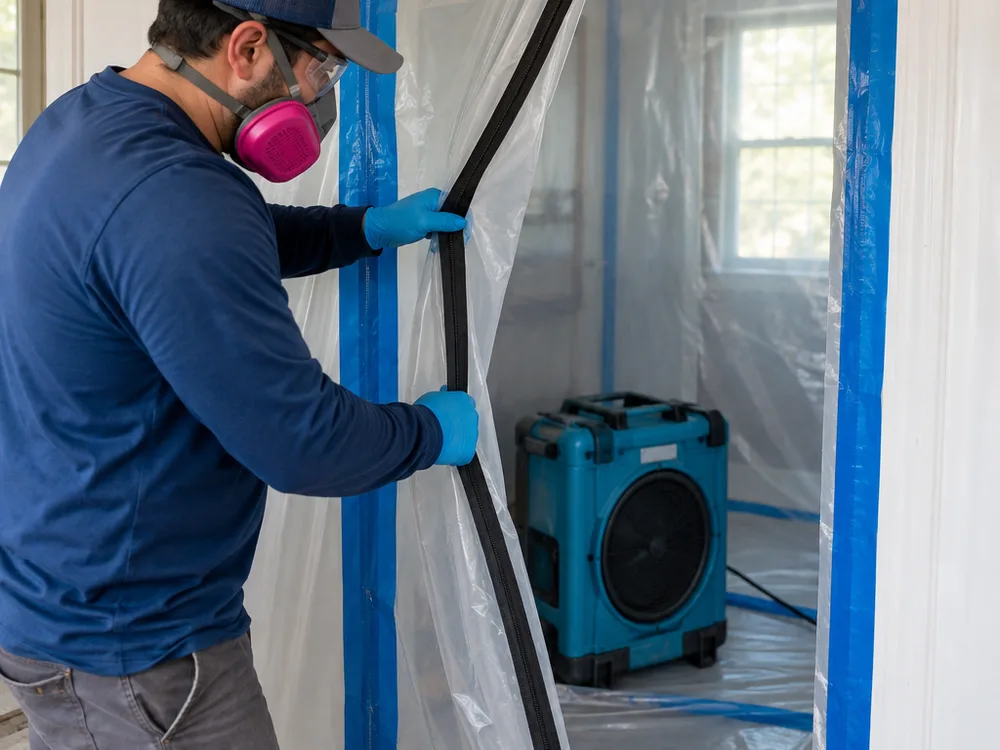
We set containment before disturbance. Cutting drywall or pulling flooring can send spores into adjacent rooms if the area is not isolated.
Negative air and HEPA vacuuming help capture fine particles during removal and cleanup, supporting better indoor air quality after the job.
Mold returns when moisture remains. We document active leaks or persistent high humidity that need correction so the fix is complete.
Shotgun doubles, raised cottages, condos, and commercial spaces have different access points and material assemblies; the removal approach reflects that.
We isolate pathways, protect floors, and plan debris removal so the rest of the home or business stays usable when possible.
Some materials clean well; others do not. We explain what is salvageable and what is likely to hold contamination or moisture.
Local moisture patterns
Moisture behaves differently depending on the building and how it is used. These are a few patterns we see often around the city:
Many properties have older assemblies and repeated minor leaks around windows, porches, and additions. Slow leaks can create mold in wall cavities without obvious surface staining.
After heavy rain events, water intrusion and elevated indoor humidity can create growth in closets, behind furniture on exterior walls, and around HVAC closets if drainage or ventilation is poor.
Homes and additions near the lake often deal with high humidity loads. If the HVAC system is oversized or not dehumidifying well, mold can develop without a dramatic leak.
Older homes with crawlspaces can see moisture moving up through flooring and framing when ventilation and vapor control are not right.
These are not hard rules. The same street can have one dry home and one home with ongoing condensation issues. A good inspection looks beyond the visible spot and asks why that area stayed damp long enough for growth to start.
Request Emergency ServiceFrom assessment to rebuild
We inspect affected spaces, check moisture, and identify likely pathways behind walls, under flooring, or above ceilings so the scope matches real conditions.
We isolate the work zone with plastic barriers and establish negative air with HEPA filtration so debris and spores stay controlled.
We carefully remove unsalvageable porous materials and dispose of them from inside containment, keeping the rest of the property clean.
We HEPA vacuum and wipe surfaces, then dry the area with dehumidification and air movement until moisture readings stabilize.
Once the area is clean and dry, we provide documentation and next-step guidance so repairs can move forward without trapping moisture inside the structure.
Planning the scope
Mold removal in New Orleans typically ranges from about $900 to $6,000+, with small, contained areas often landing around $900 to $2,500 and larger multi-room or crawlspace jobs running $3,000 to $10,000+ when demolition and drying are extensive. The final price depends on the affected area, the porous material that must be removed, access, containment requirements, and whether drying equipment must run for multiple days. Exact pricing is confirmed after an on-site inspection and written scope.
Request Emergency ServiceAnswers before removal begins
Yes, it can be safe when the work area is properly contained and kept under negative air with HEPA filtration, but every situation is different. If growth is in a main living area or anyone has asthma, allergies, or immune concerns, we may recommend staying out of the contained zone and sometimes limiting occupancy until demolition and cleanup are complete.
Most residential projects take 1 to 3 days for containment, removal, and cleaning, plus additional time if drying has to run. The timeline depends on how wet materials are, how many rooms are involved, and whether cabinets, flooring, or insulation must be removed.
Testing is optional for many jobs because visible growth with moisture damage is usually enough to justify remediation, but sampling can help when the source is unclear or documentation is needed. Existing lab results can help define the work area, while inspection and moisture readings still guide the on-site scope.
Sometimes, if growth is truly on the surface of a non-porous or semi-porous material and the backing is dry. If drywall or insulation is contaminated or has been wet, removal is usually appropriate because porous materials can hold spores and moisture after surface cleaning.
It depends on your policy and what caused the moisture. Some claims are covered when mold results from a sudden, accidental water loss, while long-term leaks and humidity issues are often excluded. We can provide a written scope and photos, but coverage decisions come from the carrier.
Keep people and pets away from the affected area, avoid fans that could move spores, and do not scrape or sand visible growth. If safe, stop the water source and run the AC or a dehumidifier to reduce humidity, then share any history of leaks, flooding, or recent repairs during scheduling.
If you suspect hidden growth after a leak or persistent humidity, a site visit can map moisture, define the right containment, and provide a written scope for repairs.
Call for Emergency HelpTake the next step
Tell us what you are seeing and where it started. We will schedule an inspection in New Orleans, explain what needs to be removed versus cleaned, and outline the steps to get the area dry and ready for rebuild.